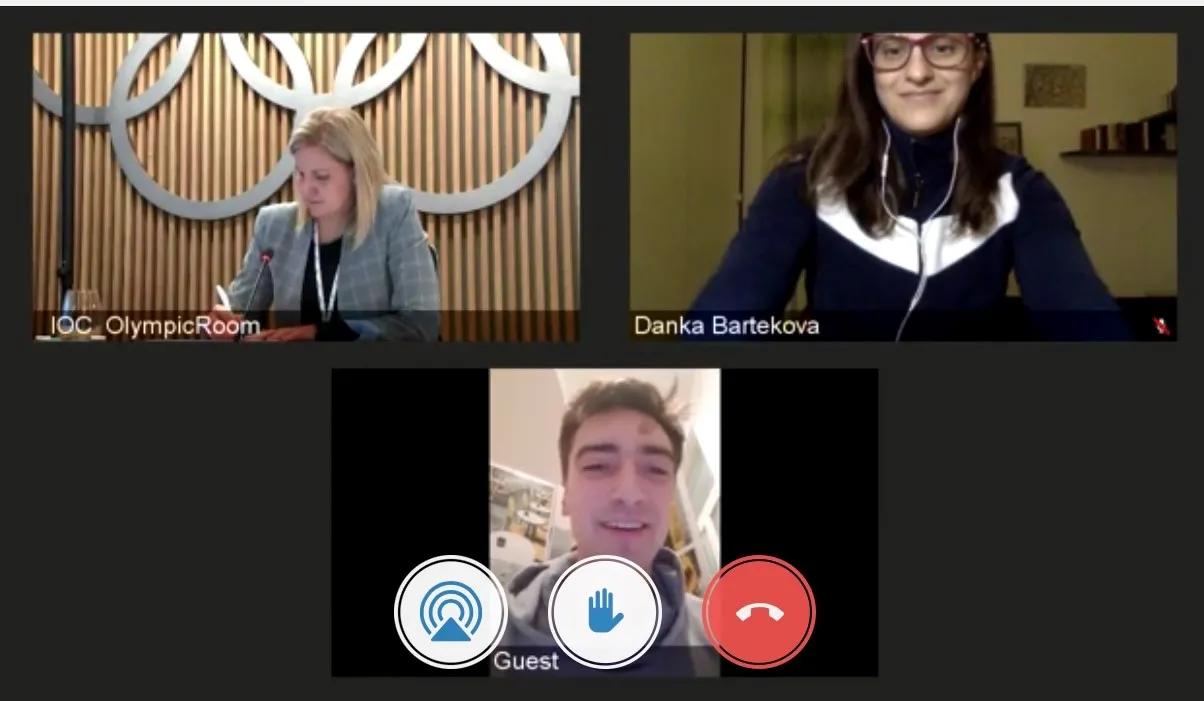


A conference call was held by the Athletes’ Commission of the International Olympic Committee (IOC) with representatives of athlete communities. During the call, recommendations on Rule 50 of the Olympic Charter, which had been approved the previous day by the IOC Executive Board, were presented.
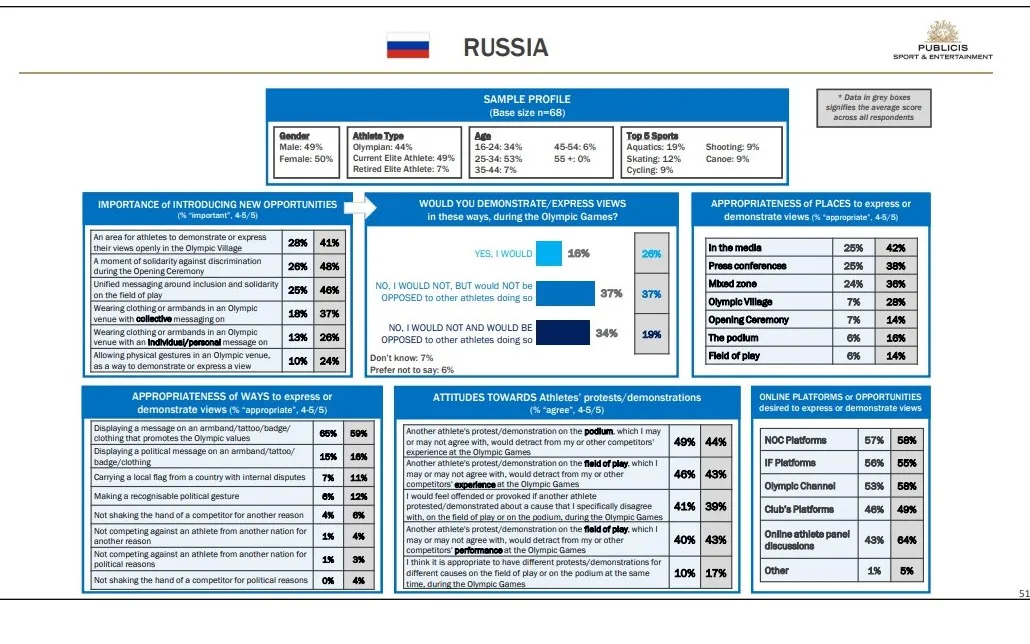
During the conference call, the Chair of the IOC Athletes’ Commission, Kirsty Coventry, and her Vice-Chair, Danka Barteková, presented to the Athletes’ Commissions of National Olympic Committees (NOCs) and international sports federations the results of a study conducted to assess athletes’ attitudes toward Rule 50 of the Olympic Charter and the possibilities for expressing personal views at the Olympic Games. The full results of the study are available via the link (in English).
Fr om the Russian side, the conference call was attended by IOC Athletes’ Commission member Yelena Isinbayeva, as well as representatives of the Athletes’ Commission of the Russian Olympic Committee (ROC): Vice-Chair Lada Zadonskaya, Commission member Jonathan Gureiro, and Secretary Ekaterina Gorokhova.
The participants of the conference call were also addressed by IOC President Thomas Bach, who thanked the IOC Athletes’ Commission and everyone who took part in the survey.
Jonathan Gureiro, speaking on behalf of the ROC Athletes’ Commission, thanked the IOC Athletes’ Commission for its important work and emphasized that Russian athletes were pleased to join such a large-scale initiative and to express their views:
“Rule 50 is extremely important. Its refinement will help preserve the value of the Olympic Games, protect athletes from politics, and at the same time provide athletes with more opportunities to demonstrate Olympic values and the unity of athletes from different countries around the world.”
Global consultations with athletes were conducted from June 2020 through early 2021. More than 3,500 athletes from 185 NOCs, representing all Olympic sports, took part in the survey.
Direct conference calls were held with the Athletes’ Commissions of nine NOCs: Russia, Germany, the United Kingdom, Ireland, New Zealand, Lithuania, Nigeria, the Netherlands, and the United States. Consultations were also conducted with representatives of 21 Athletes’ Commissions of NOCs and international sports federations. The final report of the IOC Athletes’ Commission is available via the link (in English).
As a result, on April 21, 2021, the IOC Executive Board approved the recommendations of the IOC Athletes’ Commission regarding Rule 50 of the Olympic Charter and athletes’ freedom of expression at the Olympic Games.
IOC Athletes’ Commission Recommendations on Rule 50
1. Expand opportunities for athletes’ expression during the Games
a) At the Opening and Closing Ceremonies
Recommendation:
- Emphasize the importance of solidarity, unity, and non-discrimination during the Opening and Closing Ceremonies.
- Adapt the Olympic Oath to include references to inclusion and non-discrimination:
“In the name of the athletes,” “In the name of all judges,” or “In the name of all the coaches and officials.”
“We promise to take part in these Olympic Games, respecting and abiding by the rules and in the spirit of fair play, inclusion and equality. Together we stand in solidarity and commit ourselves to sport without doping, without cheating, without any form of discrimination. We do this for the honour of our teams, in respect for the Fundamental Principles of Olympism, and to make the world a better place through sport.”
b) Olympic Village branding
Recommendation:
-
Add messages of peace, respect, solidarity, inclusion, and equality to the visual identity of the Olympic Village.
c) Through the “Olympic Truce” mural
Context:
The concept behind the design of the “Olympic Truce” mural recognizes diversity, unites people, and brings harmony. Athletes should be better informed about this Olympic Village feature in order to express their support for these values.
Recommendation:
-
Increase athletes’ awareness of the “Olympic Truce” mural and the opportunity to express support for Olympic values and ideals within the Olympic Village, including through expanded use of digital communication tools.
d) Through athletes’ apparel
Recommendation:
-
Create athlete apparel featuring messages (peace, respect, solidarity, inclusion, equality) and make it available to athletes and their entourage during the Games.
e) Through social media campaigns
Recommendation:
-
Promote the “Stronger Together” campaign through the athlete community to raise awareness of shared values of peace, respect, solidarity, inclusion, and equality.
f) Through electronic messages during sports presentations
Recommendation:
-
Add messages highlighting shared values.
2. Increase opportunities for athletes’ expression outside the Games
Context:
As Olympians, athletes are passionate about their sports and carry this passion into everyday life, wh ere they advocate for change on issues that matter deeply to them and to society. Athletes should not remain silent about issues of great importance to them. These issues may differ depending on athletes’ regions, backgrounds, and cultures.
The unique nature of the Games allows athletes to come together in peace and unity. Becoming Olympians and benefiting fr om the platform provided by the Olympic Games increases athletes’ visibility and relevance in society. The example athletes set by competing and living together in harmony in the Olympic Village sends a unique positive signal to an increasingly divided world.
Recommendation:
-
Provide athletes with platforms, including Athlete365, to discuss issues that are important to them. Any expression of views must always be respectful and consistent with Olympic values.
3. Preserve the neutrality of the podium, competition venues, and official ceremonies
Context:
Survey results showed that a clear majority of athletes consider it inappropriate to demonstrate or express opinions during competitions (70% of respondents), at official ceremonies (70%), or on the podium (67%).
This position was also widely supported during consultations between the IOC Athletes’ Commission and NOC Athletes’ Commissions. The focus of the Olympic Games should remain on athletes and their performances, sport, and Olympic values. However, some athlete representatives expressed a different view, citing freedom of expression and freedom of speech. The IOC Athletes’ Commission considered both perspectives and consulted experts in human rights and sports law. These discussions clarified that:
-
Freedom of expression is a universally recognized fundamental human right, but it is not absolute and entails duties and responsibilities.
-
Freedom of expression may be restricted under certain conditions, the assessment of which depends on the circumstances (see Recommendations 4, 5, and 6).
Following individual consultations with NOC Athletes’ Commissions, the IOC Athletes’ Commission expressed serious concern about the risk of politicization of athletes and possible external pressure. It is important to protect athletes from potential consequences of being placed in a position wh ere they may be forced to take a public stance on specific domestic or international issues, regardless of their personal beliefs. In such cases, the political neutrality of the Olympic Games serves as a means of protecting athletes from political interference or exploitation.
Recommendation:
-
Protect the podium, competition venues, and official ceremonies from any protests, demonstrations, or actions perceived as such.
4. Provide clarity regarding sanctions
Recommendation:
-
Consider violations of the current paragraph 2 of Rule 50 on a case-by-case basis to ensure due process and proportionality of sanctions.
-
The IOC Athletes’ Commission recommends that the Legal Affairs Commission clarify, in due course, the range of sanctions applicable for violations of the Rule, taking into account the specific context of each case.
5. Provide additional information on Rule 50
Recommendation:
-
Provide detailed information on the objectives and scope of Rule 50.2 and the relevant recommendations, as well as how Olympic values and the principle of non-discrimination are implemented and promoted by all stakeholders.
6. Split Rule 50 into two rules and clarify Rule 50.2
Context:
The combination of Rule 50.1 and Rule 50.2 results in a lack of clarity.
Recommendation:
-
Divide Rule 50 into two separate rules and provide greater clarity regarding the scope of Rule 50.2, including by incorporating into the Rule itself certain elements that are currently contained only in the recommendations.