
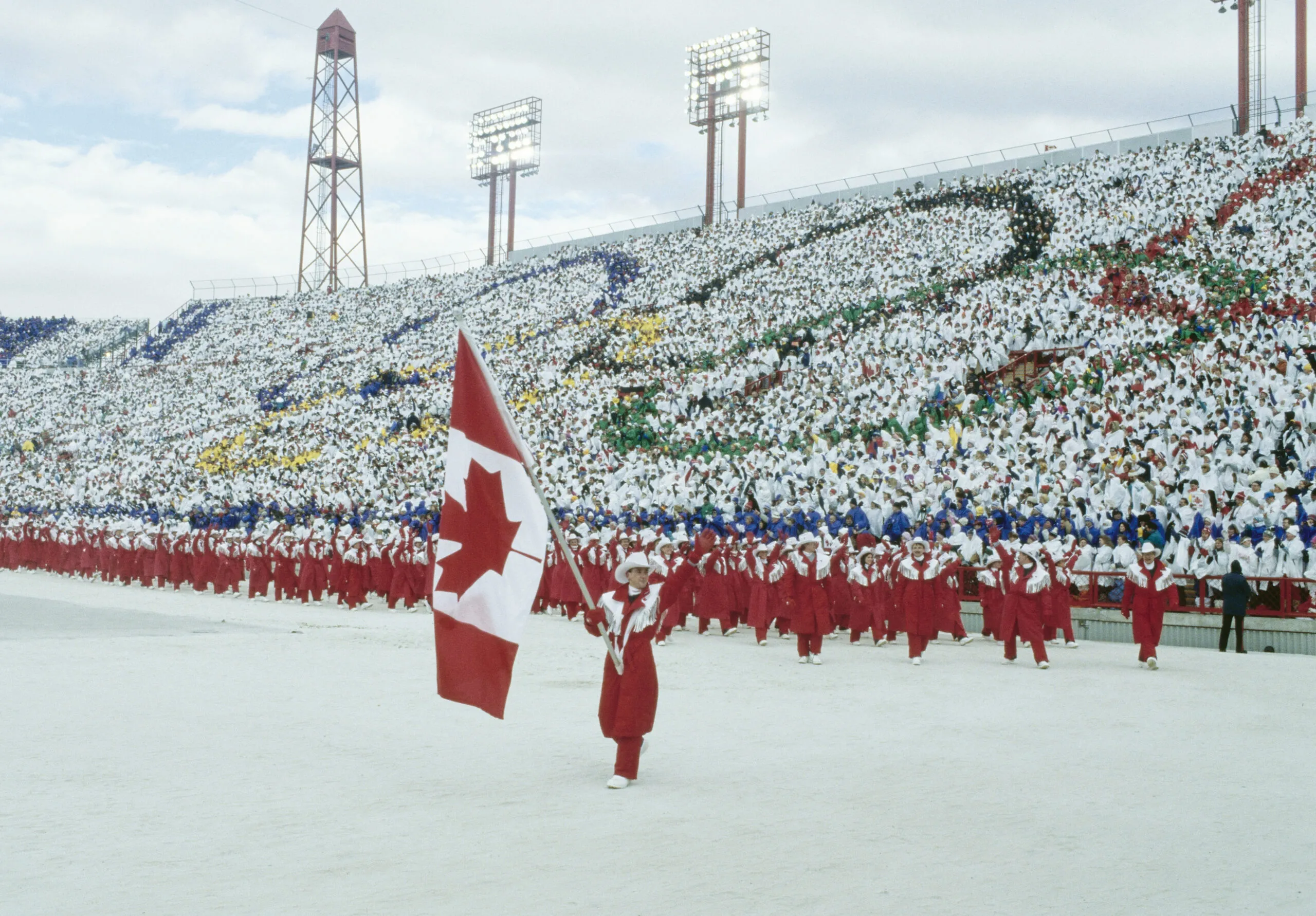


Alberta Premier Danielle Smith announced Calgary’s intention to compete for the right to host the 2038 Winter Olympic Games. According to her, the city could submit a bid if the province ensures the development of rail infrastructure, the construction of stadiums, and a funding model that does not burden taxpayers.
Smith hinted at Calgary’s possible entry into the race for the 2038 Olympics during a recent speech in the city. At the same time, she did not rule out that a bid could also come from the province’s other major city, Edmonton. The remark was part of a broader defense of her government’s record, covering the economy, healthcare, immigration policy, and relations with Prime Minister Mark Carney. Nevertheless, it was the sports-related aside that drew the most attention.
According to Smith, the key to success lies not only in enthusiasm but also in infrastructure. She spoke about plans to promote new passenger rail projects across the province, particularly the Calgary–Edmonton Corridor and a line connecting Calgary with Banff. She also emphasized accelerating investment in major sports facilities, including new arenas for the Calgary Flames (hockey) and Calgary Stampeders (Canadian football), as well as upgrades for the Edmonton Elks.
In Smith’s view, this set of measures would allow Alberta to host large-scale international events in the future. While the province is no stranger to organizing elite competitions and maintains a steady schedule of high-level events—recently hosting a national futsal championship and a rugby nations cup—the Olympic Games are an entirely different scale.
The premier even outlined a preliminary logistical plan combining transport systems, mountain venues, and urban sites—all within a financially viable framework.
“Perhaps if we have an integrated rail system, fully developed mountain resorts, impressive new stadiums and arenas in Calgary and Edmonton, fast flights to Vancouver—to use bobsleigh tracks and ski jumps—and if we ensure the Olympic Oval meets modern standards, then we might be able to submit a bid without telling Calgarians it will cost $5 billion, $6 billion, or $10 billion,” she said.
It is worth recalling that Calgary had previously considered hosting the 2026 Winter Games but withdrew its bid after a plebiscite in which more than 56% voted against the proposal, with projected costs being the decisive factor. However, the city’s mayor, Jyoti Gondek, has argued that there are “very strong commercial reasons” to pursue a bid for the 50th anniversary of the 1988 Winter Olympics.
Following that public rejection, she now considers it “crazy not to explore the opportunity,” especially given the potential to modernize outdated infrastructure.
At the same time, international factors will play a decisive role in shaping the timeline. The Canadian Olympic Committee is closely monitoring a Swiss initiative which, according to media reports, currently holds “preferred” status for hosting the 2038 Games. If Switzerland does not submit an official bid, Canada could put forward its own candidacy.
Switzerland has held this preferred status since late 2023, obtained through what is known as a “privileged dialogue” with the International Olympic Committee—an exclusive negotiation process that differs from the more traditional multi-candidate bidding systems of the past.