

The competition program of the Winter Olympic Games in Milan and Cortina d'Ampezzo has come to an end. On the final day of the 2026 Winter Olympics, athletes competed for five sets of medals.
Cross-Country Skiing
Russian fans were primarily focused on the women’s 50 km marathon, where Darya Nepryaeva was set to compete. The impressions were mixed. On the positive side, in only the second marathon of her career, she looked solid, stayed with a group of more experienced rivals, and crossed the finish line in 11th place. However, she was later disqualified for putting on the wrong pair of skis after mistakenly entering another team’s box during a ski change.
The gold medal went to Sweden’s Ebba Andersson. Taking advantage of the absence of the unwell Frida Karlsson, Andersson delivered an almost flawless race and broke away fr om Norway’s Heidi Weng in the second half of the distance. Bronze was secured with a late acceleration by Switzerland’s Nadja Kaelin.
Freestyle Skiing (Halfpipe)
The postponed women’s halfpipe final was won by Eileen Gu, competing for China. She defended the title she won four years ago and claimed her third Olympic gold medal, adding to the two silver medals she had already earned at these Games. After a failed first run, Gu delivered two outstanding performances — either of which would have been enough for gold. Silver went to China’s Li Fanghui, who edged out reigning world champion Zoe Atkin of Great Britain.
Bobsleigh
Two historic milestones nearly occurred on the bobsleigh track — but ultimately did not.
Germany’s Francesco Friedrich fell short of becoming the first athlete in history to win three consecutive Olympic four-man titles. Instead, his compatriot Johannes Lochner — the reigning World Cup champion and already a gold medalist in the two-man event — took the lead and posted the fastest times in both the third and fourth runs to secure victory.
Germany also missed out on sweeping the podium. In the two-man event, Adam Ammour had joined Lochner and Friedrich on the podium, but in the four-man competition his crew was edged out by Switzerland’s team led by Michael Vogt, who claimed silver by just 0.04 seconds.
Women’s Curling
The women’s curling final proved dramatic. Sweden, skipped by Anna Hasselborg, took a two-stone lead in the first end. However, the four-time world champions from Switzerland, led by Silvana Tirinzoni, leveled the score by the seventh end. With the score tied 5–5 before the final end, Sweden held the hammer advantage and successfully converted it. For Hasselborg, this marked her second Olympic gold medal.
Ice Hockey
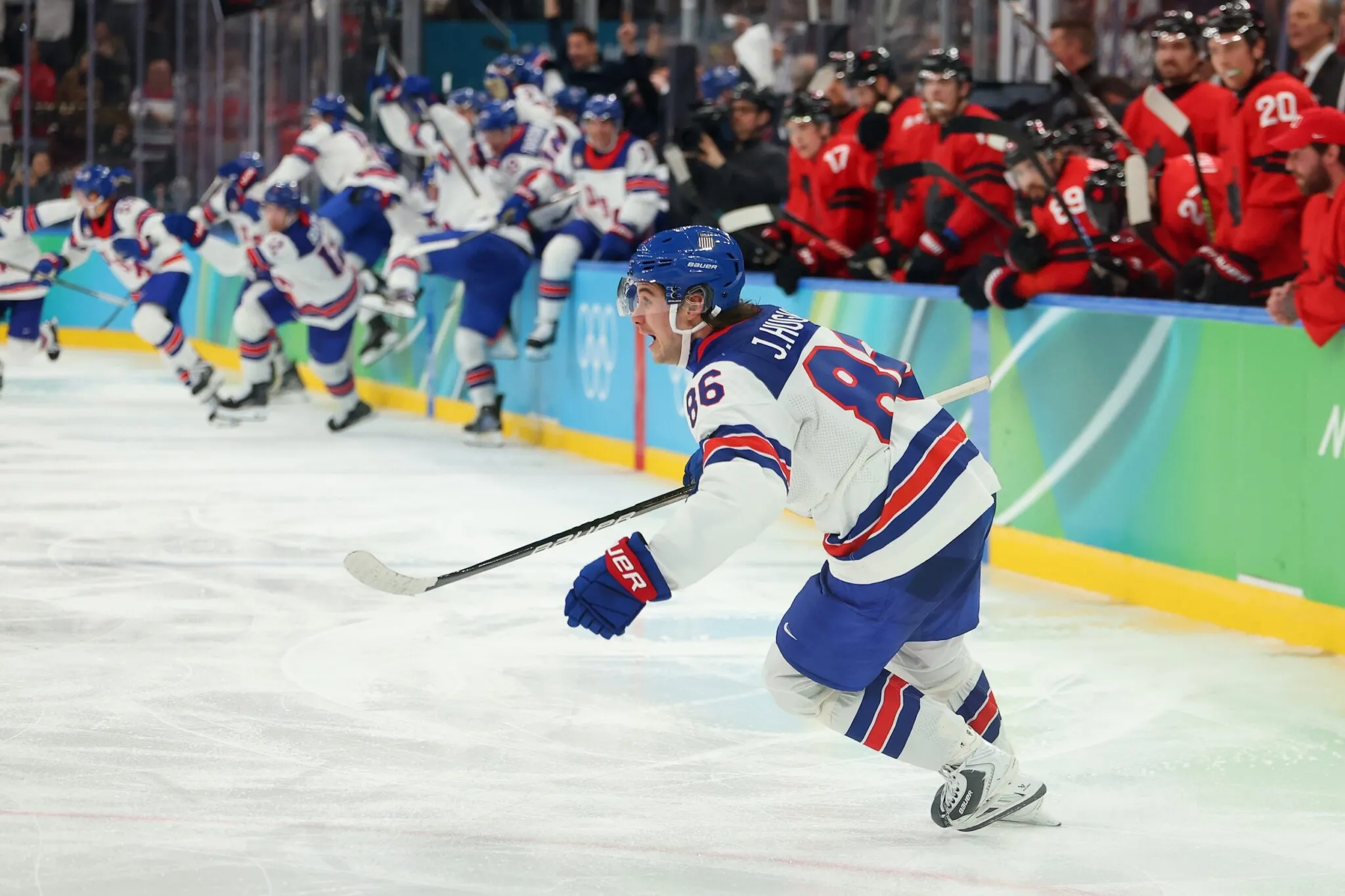
The highlight of the entire Olympic tournament was the men’s hockey final between Canada and United States. The two favorites delivered a high-speed, high-quality contest. The Americans opened the scoring early and shifted to a defensive strategy. Canada equalized late in the second period through Cale Makar, beating goaltender Connor Hellebuyck.
Canada pressed for a winner in the third period, but the game went to overtime, wh ere Jack Hughes scored the decisive goal. It marked the first Olympic gold medal in men’s hockey for the United States since 1980.
Medal Standings
Norway secured a commanding victory in the medal standings, finishing first with 18 gold, 12 silver, and 11 bronze medals (41 total). The United States placed second (33 medals: 12-12-9), followed by the Netherlands (20 medals: 10-7-3). Italy (30 medals: 10-6-14) and Germany (26 medals: 8-10-8) rounded out the top five.
Athletes competing under neutral status from Russia claimed one medal — a silver in ski mountaineering won by Nikita Filippov.