


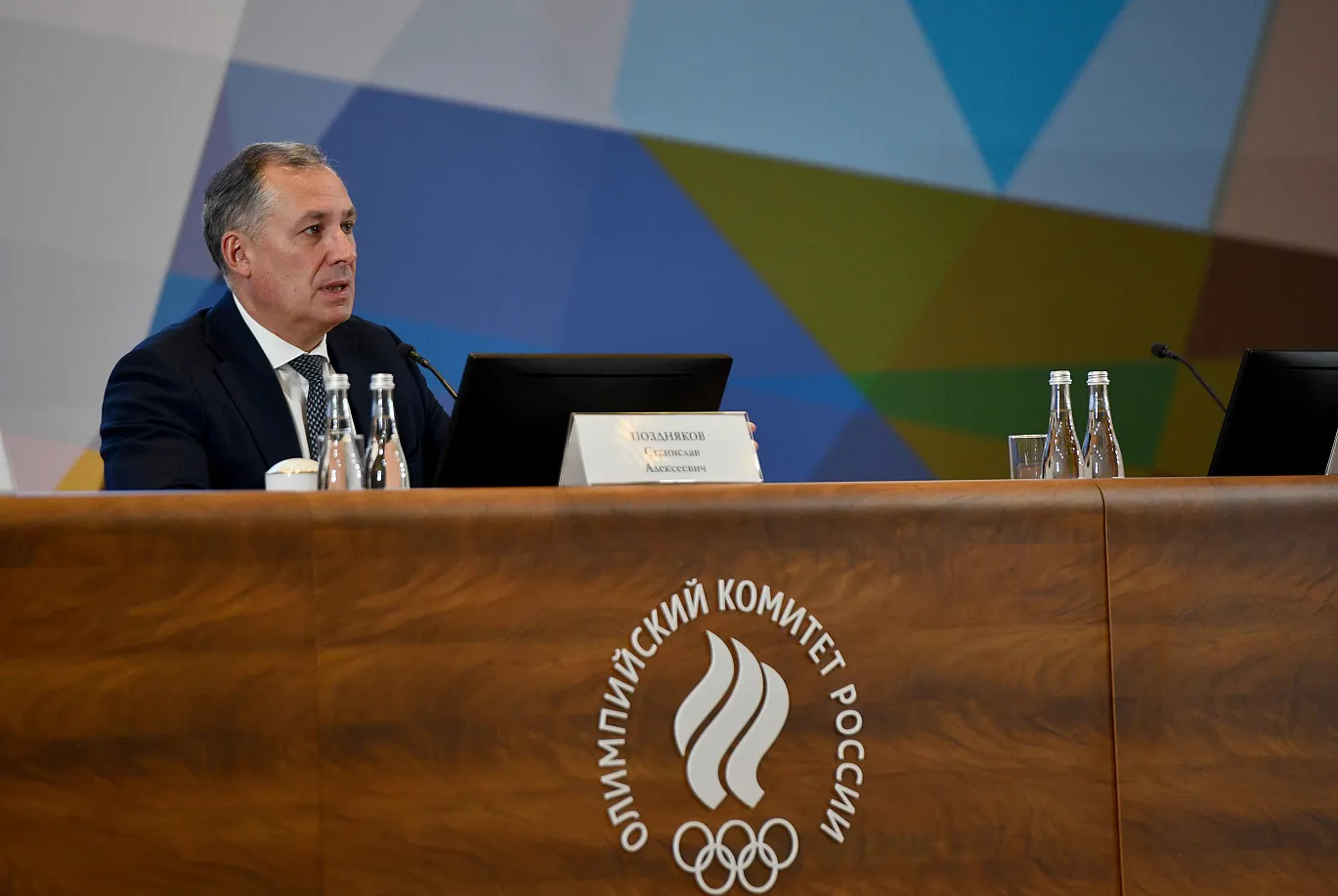
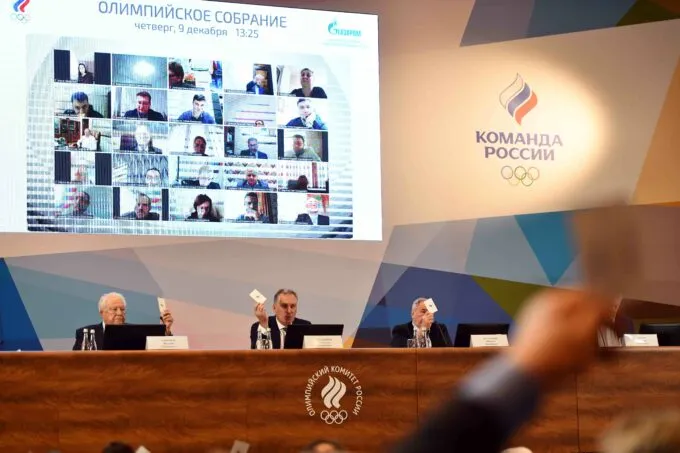
We present for your attention the text of the speech by the President of the Russian Olympic Committee at the 2021 Olympic Assembly.
Stanislav Pozdnyakov:
- Good day, esteemed colleagues!
Before moving on to the main agenda, I want to thank all of you — members of the ROC, members of the Executive Committee, commissions and public bodies, staff of our organization, and representatives of the sports sector — for your hard, professional, and responsible work over the past year.
Special thanks to our patrons, sponsors, and partner organizations: the global energy company Gazprom, the national airline Aeroflot, Nornickel, and of course, the official outfitter ZASPORT.
The main event for our entire Olympic family since the previous Olympic Assembly was undoubtedly the Games of the XXXII Olympiad in Tokyo.
Many doubted that the Games could even be held under such challenging conditions for humanity as a whole. But they did take place! Thanks to the enormous efforts of thousands of people, sport once again played an important unifying role.
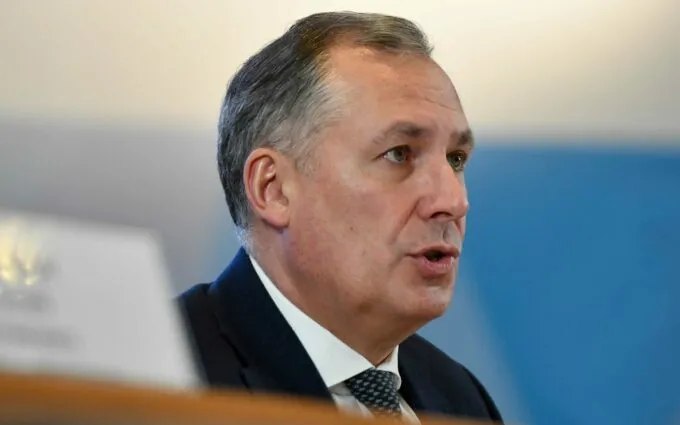
More details on the results of the four-year cycle’s main event in Japan will be shared today by our Sports Director. I will focus only on the general points.
A total of 333 Russian athletes from 52 regions of the Russian Federation participated in the competitions. 128 of them returned from Tokyo with medals — that is, almost 40 percent of all participants.
This is especially remarkable given the extraordinary conditions for preparation and competition, as you know. It is enough to recall that the preparation process for the 2020 Games stretched over five years instead of the usual four, and not only the competition schedule but the entire athlete preparation process was completely changed.
That makes every Olympic medal earned all the more valuable. The successful performance of the ROC Team in Tokyo was the result of joint, comprehensive work by athletes, coaches, sports federations, the Russian Olympic Committee, the Ministry of Sport, the FMBA, the Olympians Support Fund, and other organizations and agencies.
I would like, once again, to sincerely thank the heads of the summer sports federations — many of whom are here with us today — for their highly responsible approach to complying with the rules and regulations set by the IOC and the Tokyo 2020 Organizing Committee, as well as for strictly following our recommendations on COVID-19 protocols.
Despite the necessarily modified name — “ROC Team” — no one in Tokyo or around the world doubted which country the team represented.
The elements of the tricolor on the ROC flag and the musical accompaniment of composer Pyotr Ilyich Tchaikovsky could not replace the symbols of Russian statehood. But they sent a clear and unambiguous signal of who we are and where we come from.
We also had to solve a number of complex tasks related to implementing CAS decisions following WADA’s legal case against RUSADA. Some of our foreign “partners” in the first half of this past year persistently tried — without justification — to impose excessive restrictions on Russian national teams at World Championships regarding the use of symbols and musical accompaniment.
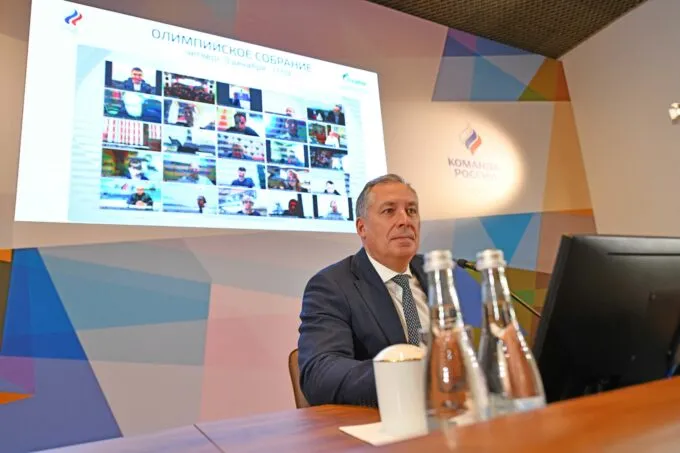
Thanks to the clear and well-considered position of the ROC’s lawyers and the legal specialists we engaged, all these issues were resolved at the pre-trial stage, fully protecting the legitimate interests of our athletes and federations.
Overall, I want to emphasize that the Russian Olympic Committee and everyone who helped us achieved the most important goal — ensuring that our Olympians could compete without any additional conditions or criteria. This is the most crucial aspect.
As a result, Russia was represented at the Tokyo Games by a full Olympic team.
Unfortunately, the pandemic conditions did not allow us to fully carry out events to support our Team during the Games. There were no spectators in Tokyo, and projects such as the Fans’ House in Tokyo and the Tokyo 2020 Fan Zone in Moscow had to be canceled.
Nevertheless, our Olympians were not left without support. Back home, the whole country truly cheered for them. Upon their return, they were honored on Red Square as national heroes — which they truly are.
It is also worth noting the sincere, very personal attention of the President of the country to our athletes. Vladimir Vladimirovich Putin met with the team twice — once before the Games and then again after Tokyo, during the state awards ceremony at the Kremlin.
We can also recall the ceremonial event held on September 11 at the Kremlin’s Cathedral Square, where the athletes were congratulated by Dmitry Anatolyevich Medvedev, Deputy Chairman of the Security Council of the Russian Federation and Chairman of the Board of Trustees of the Olympians Support Fund. Champions and medalists received cars from the Olympians Support Fund.
Special thanks go to the Chairman of the Presidium of the Fund, Igor Evgenievich Levitin, the Board members, the Fund Director Alexander Alexandrovich Katushev, and, of course, the Fund’s Board of Trustees.
These moments are always memorable and will remain in the history of our country and domestic sport!
Dear colleagues,
The Olympic Games in Tokyo are over, but the work of the ROC continues. I would like to dwell a little more on an important aspect — international activity.
Recently, we have made significant progress in terms of trust, transparency, and effective cooperation not only between leaders but also within working structures, including the IOC and international sports federations. Undoubtedly, this gives reason for optimism regarding the prospects for further mutually beneficial cooperation.
Within the framework of the International Forum “Russia – a Sporting Power,” and at the World and European Championships held in Moscow, colleagues consistently note the highest level of sports event organization in Russia.
The efforts of the ROC to strengthen the unity and solidarity of the Olympic family are also receiving widespread support. Such assessments are, of course, important. They are further confirmation that we are moving in the right direction and that the results of our work do not go unnoticed.
The Russian Olympic Committee is expanding the geography of its bilateral and multilateral cooperation with foreign NOCs.
The work of the International Committee of the “Children of Asia” Games is progressing steadily and dynamically, and the practical transformation of the now-traditional Forum of NOCs from the CIS, Baltic states, and Georgia is gaining momentum.
Foreign colleagues are keen to learn about our approaches to organizing the final stage of preparation, studying the experiences of Siberia and the Russian Far East.
Among other international activities, a landmark event has already become the Forum of Young Olympians, which we hold annually on International Children’s Day, June 1, in Moscow, with the support of IOC Olympic Solidarity, WADA, and with participation from specialists of the Russian Anti-Doping Agency (RUSADA).
Given the current pandemic-related restrictions, we have supplemented the format of events with online studios, involving international experts, renowned Russian Olympians, sports leaders, and heads of the Olympic movement.
These projects have become a priority in cultivating a sustainable anti-doping culture and in educating the younger generation of athletes with the right values and moral compass.
Another important event of 2021 was the XXV General Assembly of ANOC, attended by over 150 National Olympic Committees. For the first time in two years, world sports leaders gathered to discuss current challenges and issues, development plans, and to hear reports from specialized commissions.
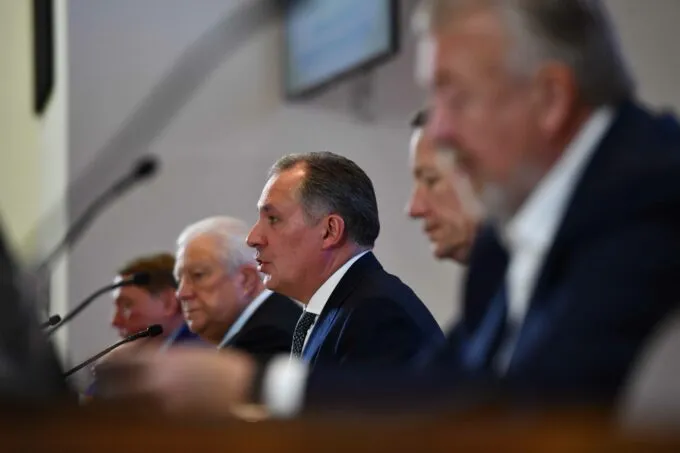
I was particularly pleased, in my capacity as Chair of the ANOC Commission on Culture and Education, to report to the Assembly that, despite the pandemic, we were able to continue productive cooperation on key priorities. The implementation of programs in the field of Olympic education is no exception.
It is no secret that the ROC is expanding funding for the international activities of the All-Russian Sports Federations themselves. We actively support the hosting of IOC events in Russia.
Among the successfully conducted events in 2021 with the support of the ROC, I would highlight: the elective Congress of the European Weightlifting Federation (EWF) in Moscow, the reporting and elective Congress of the European Confederation of Modern Pentathlon (ECMP) in Nizhny Novgorod, the elective Congress of the European Fencing Confederation in Sochi, and the beach volleyball draws for men’s and women’s teams for the Games of the XXXII Olympiad.
In early September, Russia was visited by the Monitoring Group of the Council of Europe Convention against Doping in Sport. The colleagues were genuinely impressed by the ROC’s program for training anti-doping coordinators of the All-Russian Sports Federations (based at the Russian International Olympic University) and the funding provided to federations for their salaries.
The group members noted that this project is one of the best examples of NOC involvement in anti-doping activities.
Due to the coronavirus pandemic, many countries closed their borders to foreign citizens, putting Russian athletes’ participation in numerous international tournaments at risk. The ROC, in cooperation with foreign NOCs, promptly established an operational procedure and continuously assists federations with visa arrangements (fencing, judo, sailing, pentathlon, and rowing), as well as obtaining special entry permits for Russian athletes to certain countries for sports events.
With the suspension of U.S. consular operations in Russia, Russian sports delegations planning to participate in events in the United States faced the problem of being unable to obtain visas. This affected, among others, competitions designated as qualifiers for the Beijing Games.
The ROC, together with the US NOC, developed and agreed on a procedure for obtaining U.S. visas in third countries (Armenia, Kyrgyzstan, Poland, and Uzbekistan). This procedure constitutes an exception to the standard visa issuance rules for Russian citizens and applies only to sports delegations when submitting the required documentation under the ROC–US NOC cooperation framework.
Under this procedure, 102 members of Russian sports delegations across six sports obtained U.S. visas in a timely manner. Considering that traveling to third countries to obtain U.S. visas entails unexpected costs for the All-Russian Sports Federations, a procedure for reimbursing such expenses has been approved — expenses in the interest of the athletes!
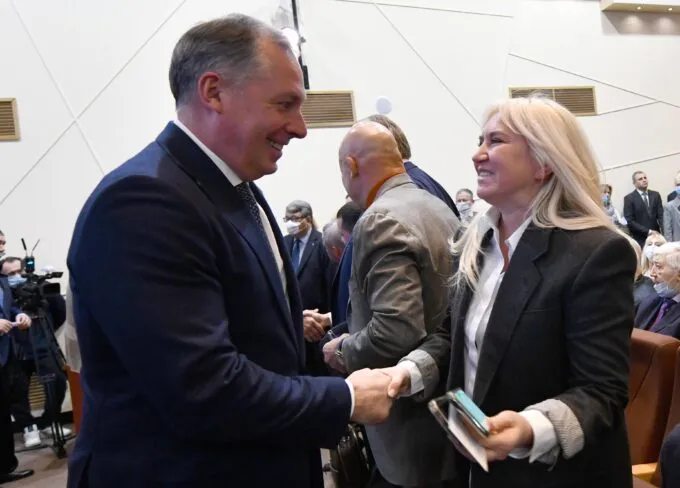
Regarding the ROC Athletes’ Commission, after a partial renewal of its membership, they have been actively increasing the depth of substantive interaction with colleagues from international and national sports organizations in the interests of Russian sport as a whole.
Our representatives regularly participate in a variety of international events, both online and in person (e.g., the 10th IOC Athletes’ Forum in May 2021).
Athletes’ Commissions are playing an increasingly prominent and extremely significant role in numerous domestic and international sports processes — from the IOC Athletes’ Commission to the Athletes’ Commissions within individual national sports federations.
We know that some of you are still preparing to establish your own Athletes’ Commissions — we are ready to provide all necessary support in addressing this crucial issue.
The ROC works closely with All-Russian Sports Federations to develop unified approaches for selecting candidates, preparing them, and promoting Russian representatives in international sports organizations. We provide federations with financial and practical assistance in these matters. The result of this work has been the consistent strengthening of our representation in the governing, working, and technical bodies of international sports organizations in 2021.
Following the European Athletes’ Assembly in Dubrovnik and the EOC Seminar in Šamorín in October–November 2021, five Russians joined the EOC working bodies, including the organization’s Athletes’ Commission.
To prepare qualified personnel for the sports sector, the ROC, together with leading educational institutions, implements a wide range of specialized educational programs.
For Russian representatives in international sports organizations, as well as candidates for nomination to international bodies, in 2021 the ROC continued implementing educational programs at MGIMO University of the Russian Ministry of Foreign Affairs. These programs focus on professional retraining and advanced training, based on a tripartite cooperation agreement between the ROC, the Russian Olympians Support Fund, and MGIMO.
The programs aim to develop and enhance the competencies necessary for the successful promotion of Russian sports interests on the international stage. These include:
-
Professional retraining program: “Global Sports: Legal Regulation, Positioning, Communications”;
-
Advanced training program: “Professional Communication in the Global Sports Environment (English for Beginners)”;
-
Advanced training program: “Professional Communication in the Global Sports Environment (English for Continuing Learners)”.
Additionally, since 2021, the ROC has commissioned the Russian International Olympic University to conduct a professional development course: “Organization and Optimization of the International Activities of an All-Russian Sports Federation.”
Dear friends,
One of the ROC’s priority objectives in preparing for participation in any international multi-sport event is the development and strengthening of a proper anti-doping culture among athletes and their support teams.
To meet your needs in this area, the ROC, together with RUSADA, regularly conducts seminars on key anti-doping topics for specialists responsible for anti-doping work in All-Russian Sports Federations. This year alone, eight such seminars have already been held at the Russian International Olympic University.

For representatives of regional Olympic councils and regional sports federations, since spring 2021, a video course on current issues of doping prevention and control has been implemented and is regularly updated.
Of course, the ROC’s educational activities are not limited to anti-doping work, sports integrity, and fostering zero tolerance for negative phenomena among athletes and their support teams.
We continue to implement educational projects aimed at the ongoing professional development of representatives of All-Russian Sports Federations and regional Olympic councils.
Each year, the ROC delivers over 20 additional training programs targeted at sports managers, leaders, and staff of sports organizations, sports schools, non-profit sports clubs, sports facilities, and competition organizing committees.
In addition to courses for grassroots coaches, the Coaching Educational Project (TOP) has been launched and successfully implemented. It has understandably generated high interest among the leadership of many All-Russian Sports Federations.
Over the past three years, within the framework of Olympic educational programs, 260 high-level coaches have completed training — notably, 12 of them are foreign specialists — representing 9 sports: speed skating, short track, cross-country skiing, swimming, athletics, rowing, weightlifting, figure skating, and canoe slalom.
The popularity of TOP demonstrates its development into an independent educational project. At the request of the Russian Biathlon Union, outside the Olympic educational program framework, a training course for 44 leading biathlon coaches was conducted in Sochi. In November, a similar course was held at the request of the All-Russian Athletics Federation (VFLA) for 24 top athletics coaches.
Over the past year, large-scale tasks were also set in the field of mass sport. As you know, the ROC implements several diverse projects in this area.
Unfortunately, due to the coronavirus pandemic, the Winter Sports Day was held in a reduced format. The All-Russian Olympic Day also proceeded without a main venue, yet it still attracted a large number of participants — nearly half a million people.
The All-Russian Walking Day involved 54 regions and over 152,000 physical culture enthusiasts, sports fans, and supporters of a healthy lifestyle. The central venue this time was successfully organized in Ufa, for which the leadership of Bashkortostan deserves special recognition.
Within the framework of the sports-educational project “Olympic Patrol”, meetings were held between celebrated Olympians and schoolchildren in Moscow, Anapa, and Sochi. This month, Olympic Patrol is also scheduled to visit Tver and Yaroslavl.
We consider this part of our agenda very important. The tasks of developing the Olympic movement and supporting our athletes fully correspond to the objectives we set within the organization of large-scale public sports events.
Colleagues,
Very soon, on February 4, 2022, the XXIV Winter Olympic Games will open in Beijing.
And already tomorrow, December 10, the official outfitter of the Russian Olympic Team, ZASPORT, will present the collection of Olympic equipment for Beijing 2022.
Given the experience of Tokyo, it was significantly easier for us to work through certain contentious issues related to CAS decisions. However, the volume and scope of the work already completed — and still ongoing at this very moment — is truly colossal.
The closer February 2022 approaches, the more requests we receive from federations for funding within the Beijing 2022 Program. This includes training camps, payment for sports equipment and gear, services of foreign specialists, airfare, obtaining US visas for qualifying events, and resolving exceptional or unforeseen situations in coordination with the IOC, international sports federations, lawyers, and experts across various fields. And this is far from all the aspects of preparation for the main four-year event for winter sports representatives.
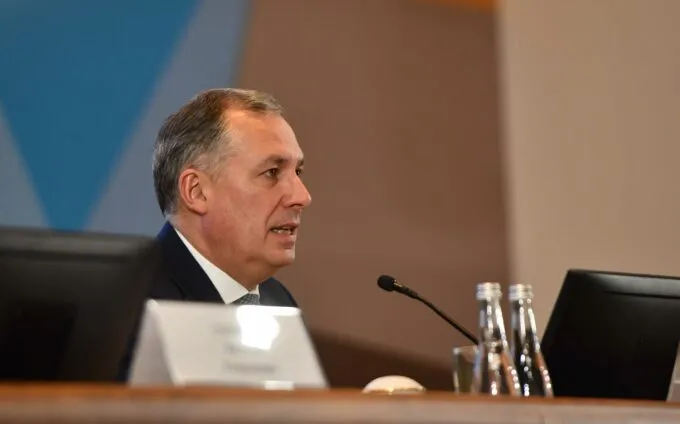
In early November, at the meeting of the Headquarters for Monitoring the Preparation of National Teams for the 2022 Olympic Games, we, together with the Ministry of Sport, federations, and representatives of relevant agencies, reviewed incoming applications and have already begun implementing them.
A list of athlete candidates for the Russian Olympic Team to participate in the Games in China was approved. It is planned that 216 Russian athletes will compete in Beijing, with the total delegation comprising about 450 people.
Our team is approaching this event with a mix of experienced athletes and younger medal contenders.
The current priority is to fully provide the athletes with the conditions necessary to reach peak performance, unlock their potential, and maximize their results at the Olympic Games.
It is clear that conditions in China will be predictably more challenging than in Tokyo, considering strict restrictions and measures to control the spread of COVID-19, among other factors.
Therefore, we are preparing for the Games comprehensively — not only in terms of sports performance but also regarding information, diplomatic, and legal support, in close cooperation with colleagues and partners. This approach has already become a consistent standard of our work.
I am confident that by using our accumulated experience and coordinating efforts clearly, we will be able to provide our athletes with all the necessary conditions for a successful performance in Beijing — efficiently implementing all points of the preparation program together with federations, the Ministry of Sport, FMBA, and other organizations and agencies.
In conclusion, I would like to emphasize that any crisis is a time of new opportunities. I believe that in 2021 we utilized these opportunities more than effectively, overcoming all the challenges we faced.