


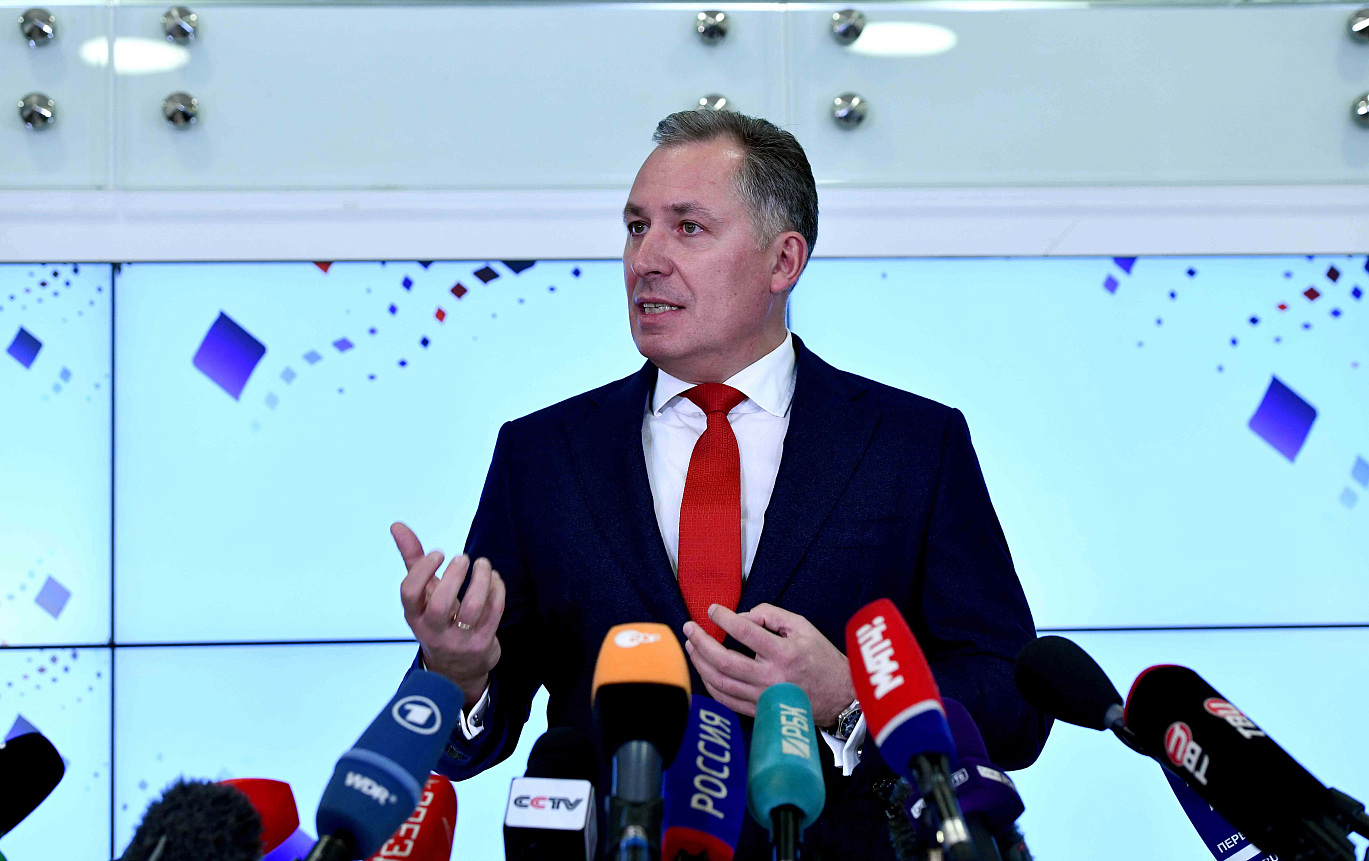
In a conversation with journalists following the Olympic Assembly, Stanislav Pozdnyakov once again emphasized that the Russian Olympic Committee (ROC) will form the team for participation in the Tokyo 2020 Games in accordance with the Olympic Charter.
“The main outcome of today’s event was the decision that the ROC will continue preparing for the Olympic Games in Tokyo in its regular working mode,” the ROC president stated. “We proceed from the fact that the National Olympic Committee of Russia is a full-fledged participant in the Olympic Movement and has the same rights as all other national Olympic committees around the world. Since the Russian Olympic Committee is not the subject of any investigations by international sports organizations, including the IOC and WADA, we will form the team for participation in the 2020 Games in accordance with the Olympic Charter — the fundamental document of the Olympic Movement.”
Today, ROC Sports Director Andrey Konokotin spoke about the performance of Russian athletes at world championships in Olympic sports. The announced figures inspire optimism. This season, our athletes have won 68 medals at major international competitions, including 25 gold medals. If these results are maintained, the Russian Olympic team will be able to compete for a place among the top three nations in the unofficial team standings at Tokyo 2020.
According to Stanislav Pozdnyakov, the Olympic Assembly did not discuss possible decisions of the upcoming December 9 WADA Executive Committee meeting. This will be addressed by the ROC Executive Committee at its next meeting in mid-December.
— Still, is the ROC ready for the possibility that Russian athletes may have to compete in Tokyo under a neutral flag?
— The answer to your question is contained in the Olympic Charter, in the relevant section clearly outlining matters related to the national flag and anthem.
— How can Russia correct the current situation?
— If RUSADA does not agree with the decision of the WADA Executive Committee, an appeal will be filed with CAS. The ROC and the Russian Paralympic Committee (RPC), as founders of RUSADA, have certain powers. However, guided by principles of good governance, the right to decide whether to agree or disagree with the accusations was transferred to the RUSADA Supervisory Board. It includes representatives of the Olympic and Paralympic movements, the Ministry of Sport, as well as independent members. They will discuss this issue after December 9.
— The leadership of RUSADA will receive an invitation to the ROC Executive Committee meeting. Is dialogue between you continuing?
— In accordance with the regulations, RUSADA’s leadership will certainly be invited to the meeting. Normal interaction between us continues, and the tension being artificially created today largely only interferes with the work.
— Are there concerns that the possible appeal procedure against the WADA Executive Committee’s verdict could drag on too long?
— Practice shows that consideration of appeals at CAS takes about three months. Therefore, we will have enough time to dot all the i’s before the team departs for Tokyo.
— Thomas Bach stated that the IOC would rely on the WADA Code, which was amended in April 2019. Does this mean that not everything now depends on the IOC?
— The WADA Compliance Committee’s recommendations do not mention the ROC or national federations. Therefore, all decisions concerning legitimate organizations — in this case the ROC or national sports federations — will be made by the IOC and the respective international federations. There is a clear division of responsibilities here.
Ilya Zubko, Natalia Pakhalenko (photo)
ROC Information Service