

Leaders of Russian sport discussed topical problems in the sports field and ways to solve them. By the beginning of the event, the hall was already full. The announced topic and the composition of the main speakers promised a very interesting and productive discussion.
The session was opened by the Minister of Sport of the Russian Federation Oleg Matytsin.
– The Russian Olympic Committee always takes an active position on topical issues of the sports agenda. True, in this case, I would not separate the Olympic movement from the sports one, because we are talking about Russia as a great sports power. An example of interaction between the ROC and the Ministry of Sport shows that only as a united team can we overcome the challenges that we will talk about today.
The direction of our work in modern conditions was clearly outlined by the President of the Russian Federation. We must actively protect the interests of athletes and national federations, as well as create new competition formats, including through interaction with partners in the Shanghai Cooperation Organization, BRICS and the CIS, in order to preserve the potential of our athletes and ensure domestic competition. Present today are the heads of regional executive authorities in the sports field, presidents of federations, leaders of the Russian Union of Athletes and other public associations. This shows that we have huge potential. I am sure that the global sports community will eventually realize the harm it is doing to itself by applying sanctions to Russian sport. Because there are very few reliable partners like Russia in the world.
Assistant to the President of the Russian Federation Igor Levitin drew the attention of the participants to the lack of a clear understanding in world sports of what the modern Olympic movement is.
– Does the Olympic movement represent all sport or only Olympic sport? If it represents the latter, then why do the sanctions apply to all Russian sport, including non-Olympic or national sports? The chaos that is now happening in the world has clearly shown the imperfection of the structure of management of international sports. I think that foreign sports leaders already understand that sanctions are harming them more than Russia, but they do not know how to get out of this unpleasant situation. At the Eastern Economic Forum in Vladivostok, the President of the country made it clear that Russia will not fence itself off from the rest of the world. In sports, I think we must also remain committed to the principles formulated by Baron de Coubertin and enshrined in the Olympic Charter. Leaving the Olympic movement for some alternative formats would be a big mistake. This cannot be allowed.
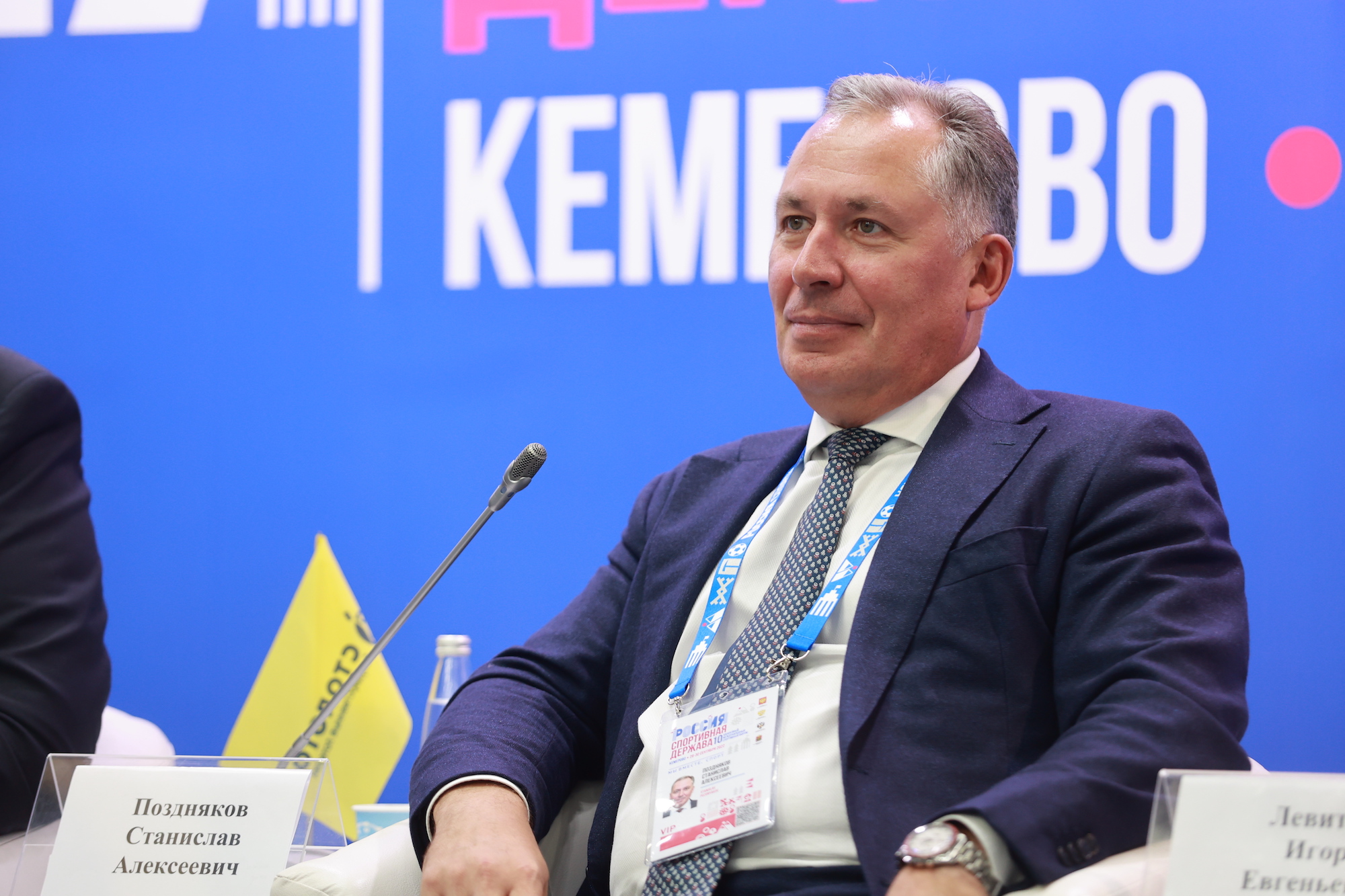
Stanislav Pozdnyakov emphasized that the participation of Russian athletes in qualifying competitions and subsequent performance at the 2024 Games in Paris remains a top priority for the Russian Olympic Committee.
– The only way to keep the international Olympic movement in the form that its creators dreamed of is to distance themselves from politics. Based on the tone at the meetings that the IOC recently held with international sports federations, we can say that the information background imposed by the Western media no longer corresponds to reality. The rhetoric of our colleagues has recently become more pragmatic. The realization has come to them that Russia is too big and too important a sports power to be excluded from the Olympic movement. International sports organizations have suffered serious financial losses due to the non-participation of Russian athletes in competitions. Therefore, it can be assumed that the IOC will try to correct course.
The ROC is doing everything possible for Russian athletes to take part in the qualifying Olympic competitions. It is important that Olympians are ready to join the fight for licenses for the 2024 Games as soon as the opportunity presents itself. Helping them in this is our primary task. As for future plans and priorities, they are reflected in the draft Development Strategy for the ROC until 2028. We need to start working closely on the Olympic reserve right now so as to prepare the foundation for a team that will go to the Olympics in Los Angeles in six years. And not just go there, but take one of the top three places. It is on the territory of a strong opponent that we must demonstrate our best qualities!
The Deputy Minister of Sport of the Russian Federation Alexei Morozov noted that the state had all the necessary resources to ensure the training of athletes in the face of tough sanctions.
– We have made appropriate changes to the Program for the preparation for the 2024 Games, which provide for plan A and plan B. The most difficult situation so far is in gaming disciplines. Here the non-participation of our athletes in competitions becomes critical. In individual sports, the struggle for Olympic licenses will mainly begin next year. Athletes are now being trained on the territory of the Russian Federation and in friendly countries. We have analyzed the possibilities of the existing sports infrastructure, identified growth points and we will move forward. The state has resources for this.
In matters of inventory and high-tech equipment, the policy of import substitution will continue. You could see some examples of what we are currently working on together with the Ministry of Industry and Trade at the Forum venues. We are also trying to develop spot production in order to cover not only the needs of national teams, but also the reserve. Now with regard to holding competitions within Russia and on the territory of friendly countries. Just last week, a meeting of the Sports Committee of the CIS countries was held, where a declaration was unanimously adopted prohibiting any discrimination of athletes within the borders of the CIS. We also received detailed information from colleagues on the opportunities they can offer within the framework of sports cooperation.
The Chairman of the State Duma Committee on Physical Culture and Sport Dmitry Svishchev spoke about measures to support Russian athletes at the legislative level.
– Now our Committee is responsible for 16 different bills aimed at adapting sports to the new conditions. Including the law on providing an opportunity for public associations to hold competitions outside of Russia. Deputies of the State Duma are ready to provide the maximum possible support to our sports federations and protect athletes, at least at the legislative level.
The Director General of the ROC Vladimir Sengleev made a presentation of the draft Strategy for the Development of the ROC until 2028. The main goal of the Russian Olympic Committee during this period will be to promote the sustainable development and effective operation of ROC member organizations, creating conditions for the qualitative development and realization of a person’s sports abilities. The development of Olympic sports and mass sports, assistance in the preparation of the Olympic reserve in the medium term, promotion of Olympic ideals and values, Olympic education, international activities, as well as legal support and anti-doping activities have been identified as priority areas for the work of the ROC within the next six years.